Research peptides
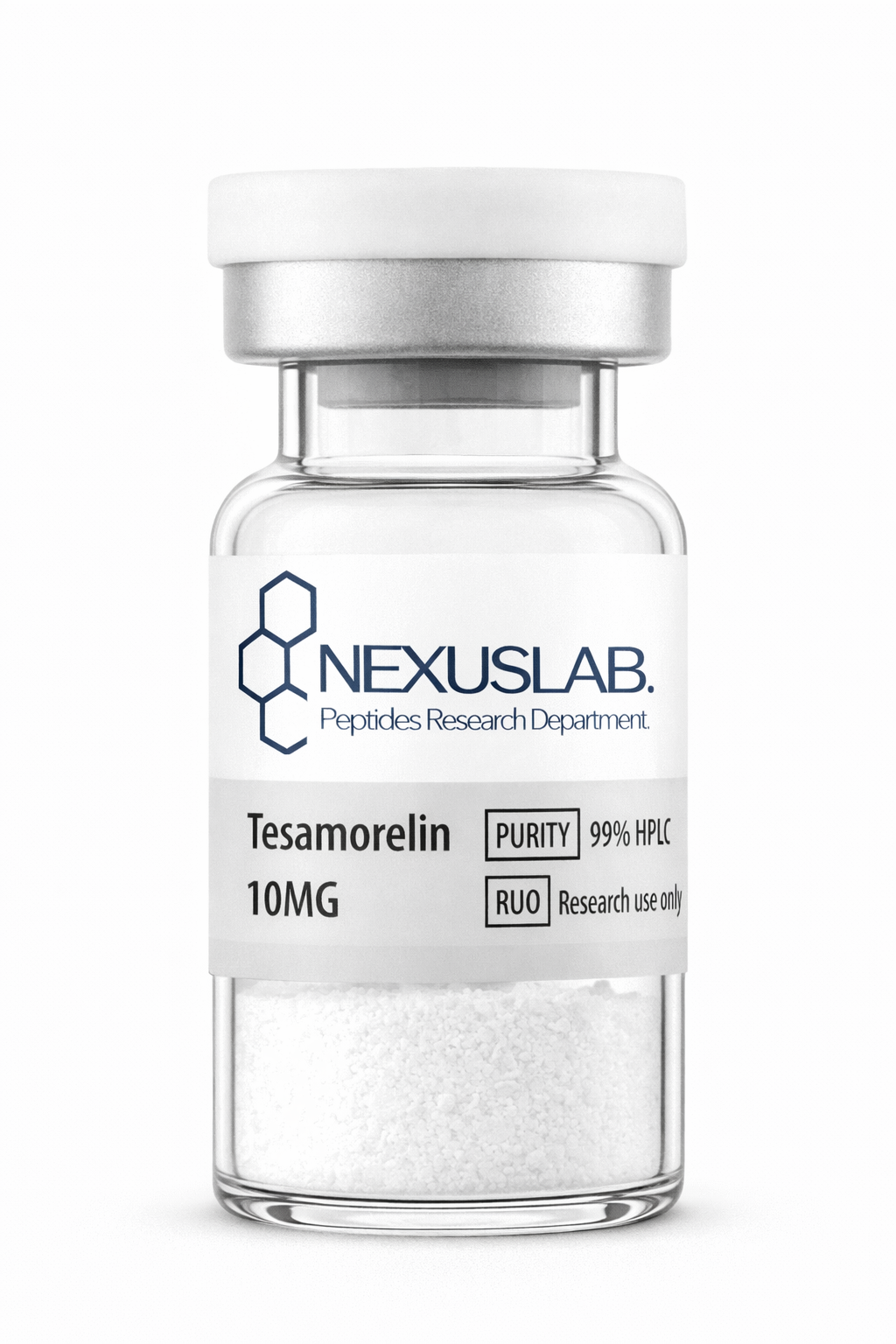
Tesamorelin
Available documentary data and items still to verify are detailed below.
Price incl. VAT€65.00
AvailabilityAvailable
SKUTESAMORELIN
Loading availability…
 0
0
Research peptides
Available documentary data and items still to verify are detailed below.
Loading availability…
02 — Information to verify
Tesamorelin is a synthetic peptide analogue of GHRH, growth-hormone-releasing hormone. Research examines its interaction with the GHRH receptor and signalling along the GH/IGF-1 axis.
Technical data
Format: 10 mg. The molecular record describes a 44-residue peptide with an N-terminal trans-3-hexenoyl group. The one-letter sequence alone does not represent this modification.
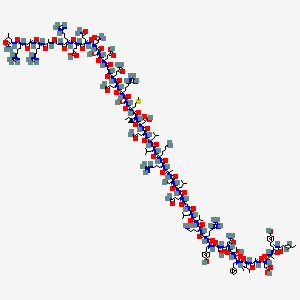
Reference molecular data.
The cited papers analyse transcriptomic and proteomic responses in studies of experimental tesamorelin formulations. They describe metabolic and immune pathways in specific study populations.
Tesamorelin is studied as an analogue of the hypothalamic GHRH signal targeting the pituitary receptor. Responses include GH release and changes in the IGF-1 axis. Stimulating a regulated pathway differs from adding GH directly; peptide structure and endocrine context influence comparisons.
The cited studies concern people with HIV and defined changes in fat distribution. Visceral adipose volume, subcutaneous fat, and liver-fat fraction are separate measurements. Analyses also include radiological tissue density, which differs from the amount of fat lost.
10.1093/cid/cis251 10.1097/QAD.0000000000002897 10.1017/cts.2022.515
The JCI Insight paper examines liver gene sets across metabolic, inflammatory, and remodelling pathways. It reports enrichment of oxidative-phosphorylation signals and reductions in groups related to inflammation and cell division. A transcriptomic score is not equivalent to an individual clinical outcome.
The targeted proteomic study compares nine plasma proteins connected with pathways identified by gene analysis. The authors report lower VEGFA, TGFB1, and CSF1 versus placebo and correlations with liver-activity or fibrosis scores. Correlation between markers alone does not establish which step causes the outcome.
Research also evaluates proteins associated with T cells, monocytes, macrophages, and liver immune pathways. Post-hoc analyses ask additional questions of existing data. Peripheral-nerve injury is an exploratory topic without a complete verified reference here and is not presented as an established benefit.
Catalog of products presented for research activities. Not for human or veterinary use. This notice does not replace verification of applicable rules.