Research peptides
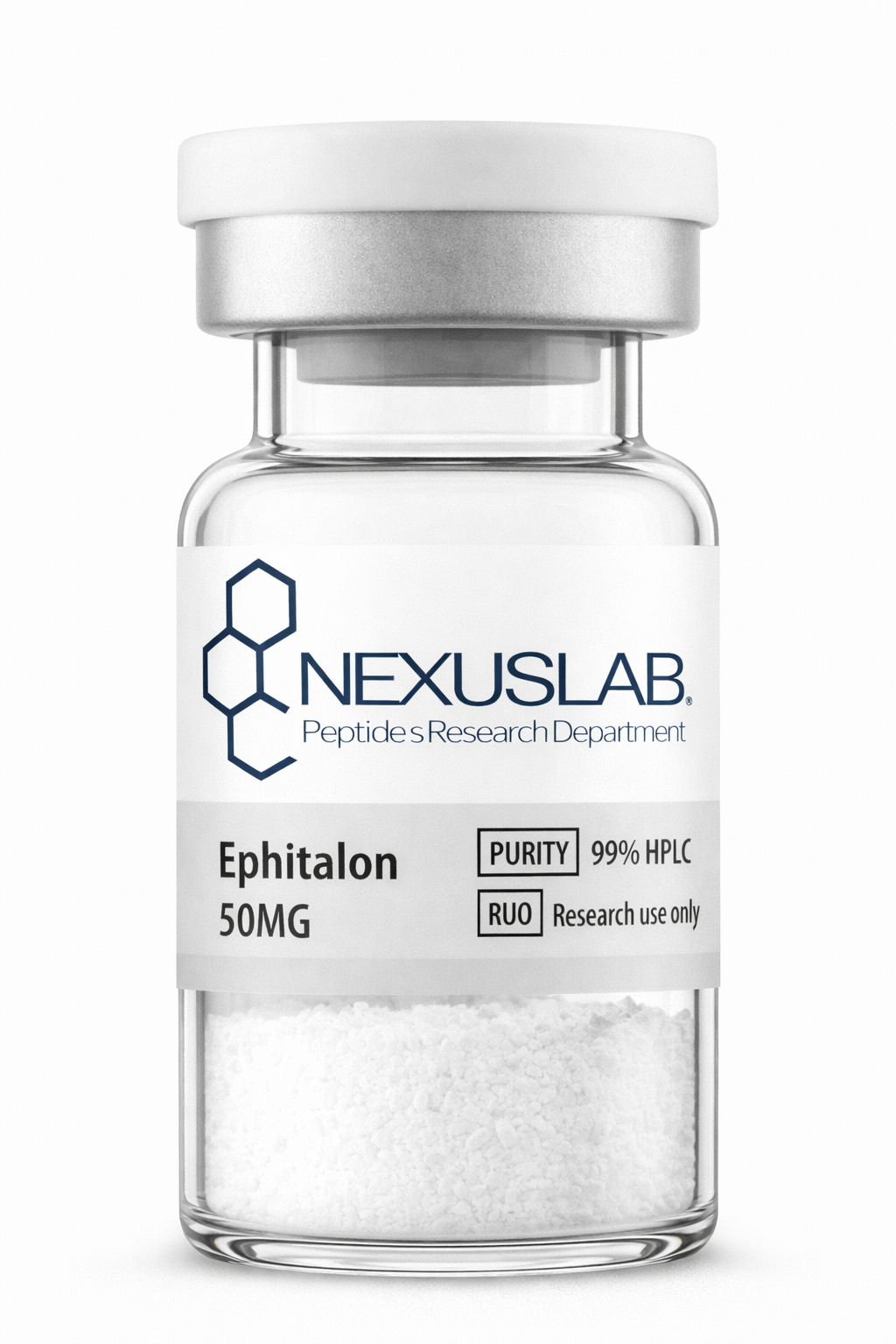
Ephitalon-Epitalon
Available documentary data and items still to verify are detailed below.
Price incl. VAT€128.00
AvailabilityAvailable
SKUEpitalon
Loading availability…
 0
0
Research peptides
Available documentary data and items still to verify are detailed below.
Loading availability…
02 — Information to verify
Epitalon, also called epithalon, is a synthetic tetrapeptide with sequence Ala-Glu-Asp-Gly (AEDG). Research examines gene-expression regulation, cellular stress, and ageing biology.
Technical data
Catalog format: 50 mg. PubChem reference CID 219042 lists formula C14H22N4O9 and mass 390.35 g/mol. These values describe the molecule, excluding any salt or excipient in the pack.
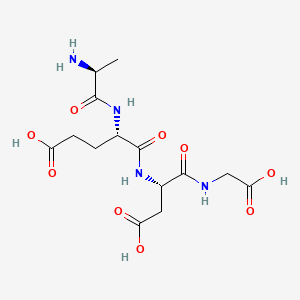
Reference molecular data.
One cited study examines mouse oocytes maintained in vitro, measuring oxidative-stress markers, mitochondrial function, and cellular damage. Another evaluates gene expression and protein synthesis in neurogenesis models. These are limited experimental findings and do not establish rejuvenation or lifespan extension in humans.
Epitalon is studied within short-peptide research associated with pineal biology and cellular regulation. Telomere length, gene expression, and oxidative stress are different measurements. A change in one marker alone does not establish slower ageing of the whole organism.
The 2022 study follows mouse oocytes maintained in vitro after ovulation. It measures reactive oxygen species, mitochondrial membrane potential, mitochondrial-DNA copies, and apoptosis. The authors report favourable changes within their protocol; the result concerns isolated cells, not human fertility.
The same model assesses spindle morphology and cortical-granule distribution, features of oocyte organisation. These are structural observations additional to metabolic markers. Connecting them to embryo development requires dedicated measurements; they are not equivalent to an established reproductive outcome.
The AEDG paper studies gene expression and protein synthesis in neuronal-differentiation models. It discusses possible relationships among peptide, chromatin regulation, and cellular programmes. Changing a differentiation marker does not demonstrate nervous-system regeneration or treatment of a neurodegenerative disease.
The bibliography includes rat cortical-activity recordings, thymocyte immune signalling, and hormone rhythms in non-human primates. Measurements may concern melatonin, cortisol, and pancreatic parameters. Species, age, and peptide material must be distinguished; pineal-peptide studies do not all investigate the same Epitalon formulation.
The 2003 paper uses cultured human fetal fibroblasts and reports telomerase catalytic-subunit expression, enzyme activity, and telomere elongation after peptide exposure. These are three related but different measurement levels. Human cell origin does not make the experiment a human longevity study.
Catalog of products presented for research activities. Not for human or veterinary use. This notice does not replace verification of applicable rules.